


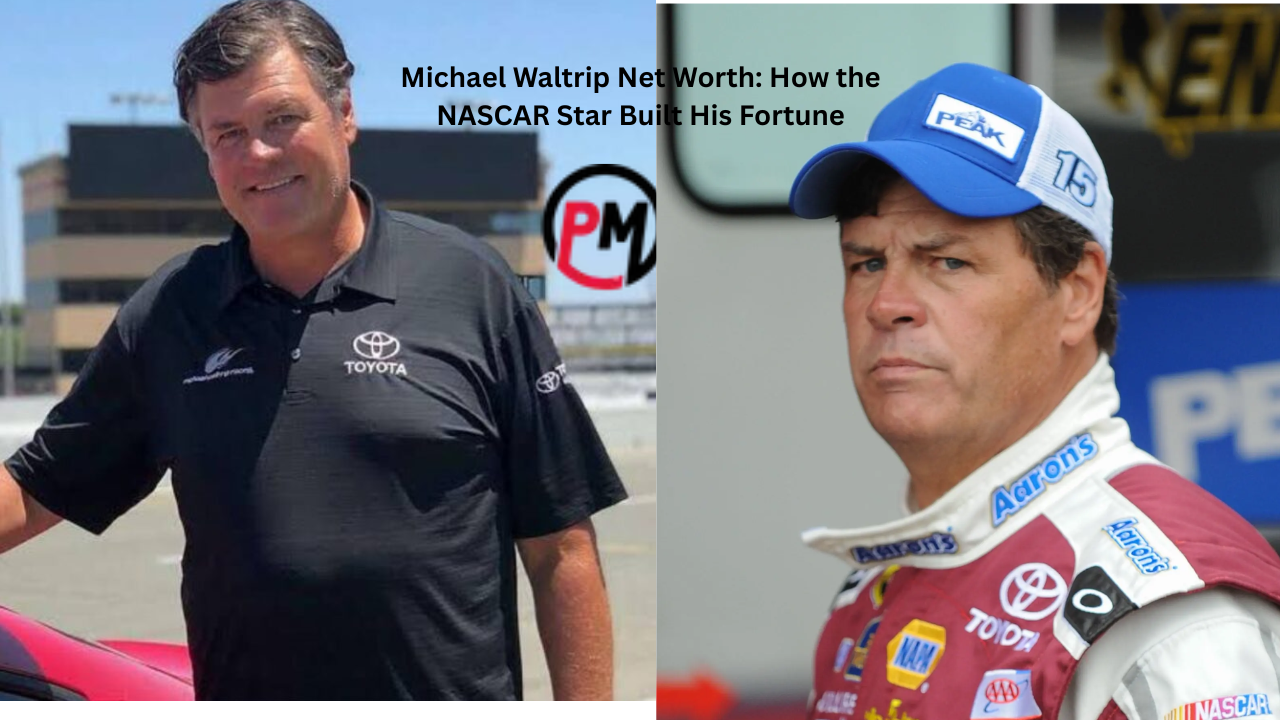
For many racing fans, Michael Waltrip is more than a former NASCAR driver. He’s a familiar face on television, a team owner, an author, and someone who managed to stay relevant long after stepping away from full-time competition.
That naturally raises a question people often ask: what is Michael Waltrip’s net worth, and how did he earn it?
The answer isn’t tied to a single paycheck or a few successful races. His financial journey stretches across decades of racing, sponsorship deals, business ventures, broadcasting work, and smart brand-building. It’s a story that shows how athletes can create long-term wealth even after their competitive careers slow down.
Table of Contents
- Michael Waltrip Net Worth Overview
- Who Is Michael Waltrip?
- Early Racing Years and Financial Struggles
- The Daytona 500 Victories That Changed Everything
- Building Wealth Through NASCAR Earnings
- Sponsorships and Business Ventures
- Michael Waltrip Racing and Team Ownership
- Television Career and Media Income
- Real Estate and Lifestyle
- How Michael Waltrip Compares to Other NASCAR Figures
- What We Can Learn From His Financial Journey
- Final Thoughts
Michael Waltrip Net Worth Overview
Michael Waltrip’s net worth is commonly estimated to be around $35 million, although exact figures can vary depending on the source.
That’s a substantial amount, especially when you consider that his career wasn’t always filled with victories and championship-level success. In fact, for many years, Waltrip was known more for perseverance than for winning.
His wealth comes from multiple income streams accumulated over time:
- NASCAR race earnings
- Sponsorship agreements
- Team ownership
- Broadcasting contracts
- Book sales and public appearances
- Business investments
What makes his story interesting is that it wasn’t built overnight. It grew steadily through a combination of persistence and opportunity.
Who Is Michael Waltrip?
Michael Curtis Waltrip was born on April 30, 1963, in Owensboro, Kentucky.
Many people first recognize him as the younger brother of NASCAR Hall of Famer Darrell Waltrip. Growing up around racing created obvious expectations, but it also brought pressure. Living in the shadow of a legendary sibling isn’t always easy.
Still, Michael forged his own path.
He entered NASCAR’s top level during the 1980s and spent years competing against some of the biggest names in motorsports. His career eventually spanned more than three decades, making him one of the sport’s most recognizable personalities.
Today, even fans who never watched him race often know him from race broadcasts and NASCAR coverage.
Early Racing Years and Financial Struggles
Here’s the thing many people forget.
Michael Waltrip’s career didn’t start with huge paychecks and sponsorship riches.
For years, he struggled to win races. In fact, he famously went more than 460 starts before earning his first NASCAR Cup Series victory.
Imagine working in a profession for years while constantly being compared to top performers. Most people would probably quit.
Waltrip didn’t.
During those early seasons, earnings were decent by average standards but nowhere near what elite NASCAR drivers were making. Racing expenses, travel, crew costs, and team dynamics often limited financial growth.
This period highlights an important reality in professional sports. Success isn’t always immediate. Sometimes the people who eventually build significant wealth are the ones who simply stay in the game long enough for opportunities to arrive.
The Daytona 500 Victories That Changed Everything
Everything changed in 2001.
Michael Waltrip won the Daytona 500, NASCAR’s most prestigious race.
For drivers, winning Daytona is similar to a golfer winning The Masters or a football player winning the Super Bowl. It instantly changes public perception.
The victory also came during one of the most emotional days in NASCAR history due to the tragic death of Dale Earnhardt Sr., whose team Waltrip was driving for at the time.
From a financial perspective, that win transformed his marketability.
Sponsors became more interested.
Media opportunities expanded.
Appearance fees increased.
His personal brand suddenly carried far more value.
Waltrip later won the Daytona 500 again in 2003, proving the first victory wasn’t a fluke. Those wins became major milestones that significantly contributed to his long-term earning power.
Building Wealth Through NASCAR Earnings
Professional racing can be incredibly lucrative, particularly for drivers who maintain long careers.
While exact career earnings aren’t publicly available in full detail, Michael Waltrip earned millions through race winnings and performance bonuses throughout his NASCAR career.
Drivers don’t simply collect prize money.
Many contracts include:
- Performance incentives
- Sponsor bonuses
- Merchandise percentages
- Appearance payments
- Licensing revenue
A driver with Waltrip’s longevity benefits from years of accumulated earnings.
Think about it like a professional who receives steady promotions over three decades. The wealth doesn’t come from one extraordinary year. It comes from consistent income over a long period.
That pattern fits Waltrip’s career quite well.
Sponsorships and Business Ventures
Sponsorship money often exceeds race winnings in motorsports.
That’s why companies spend millions to place their logos on cars, uniforms, and promotional materials.
Over the years, Michael Waltrip worked with major sponsors that helped elevate both his visibility and income.
Companies value athletes who connect with fans, and Waltrip has always been known for his approachable personality. He’s energetic, humorous, and comfortable in front of cameras.
Those traits matter.
A sponsor doesn’t just want speed. They want someone who can represent the brand effectively.
Beyond sponsorships, Waltrip explored business opportunities that diversified his income. Like many successful athletes, he recognized that relying solely on competition earnings isn’t always the best long-term strategy.
Multiple revenue streams create financial stability.
That’s true whether you’re a NASCAR driver or a small business owner.
Michael Waltrip Racing and Team Ownership
One of the biggest contributors to Michael Waltrip’s wealth was his move into team ownership.
Michael Waltrip Racing, often known as MWR, became a significant presence in NASCAR during the 2000s and early 2010s.
Owning a racing organization is dramatically different from being a driver.
Instead of earning only from personal performance, team owners can generate revenue through:
- Sponsorship agreements
- Team partnerships
- Driver contracts
- Equipment deals
- Prize money distributions
Of course, ownership also comes with major risks.
Running a racing team requires substantial investment. Expenses can reach millions of dollars annually.
Even so, the success and visibility of Michael Waltrip Racing helped strengthen his overall financial position and expand his influence within the sport.
The team eventually closed operations, but its existence played an important role in building Waltrip’s business profile.
Television Career and Media Income
Many retired athletes struggle to remain relevant.
Michael Waltrip took a different route.
He transitioned into broadcasting and media work, where his personality became one of his greatest assets.
Fans already knew him.
Networks recognized his experience.
The combination worked well.
Waltrip has appeared as a NASCAR analyst and commentator for major sports broadcasts, helping audiences understand race strategy, driver decisions, and industry developments.
Television work can provide a stable and lucrative source of income after retirement from competition.
It also keeps public figures visible, which often leads to additional opportunities such as speaking engagements, endorsements, and event appearances.
In many ways, broadcasting became a second career rather than simply a retirement hobby.
Real Estate and Lifestyle
When people hear that someone has a net worth of around $35 million, they often imagine a lifestyle filled with endless luxury.
Reality tends to be more balanced.
Michael Waltrip has certainly enjoyed the benefits of financial success, including comfortable homes, travel opportunities, and access to experiences many people only dream about.
At the same time, he has generally maintained a public image that feels approachable rather than extravagant.
That’s one reason fans continue to relate to him.
He’s successful, but he doesn’t come across as disconnected from everyday people.
Financially successful individuals often understand that wealth isn’t just about spending. It’s also about managing assets, protecting income streams, and making decisions that preserve long-term value.
How Michael Waltrip Compares to Other NASCAR Figures
Compared with NASCAR legends such as Jeff Gordon, Dale Earnhardt Jr., or Jimmie Johnson, Michael Waltrip’s net worth is somewhat lower.
That’s not surprising.
Those drivers accumulated larger numbers of victories, championships, and mega-sponsorship deals.
However, Waltrip’s estimated fortune still places him among the financially successful figures in NASCAR history.
What’s particularly impressive is how he achieved it.
He wasn’t the most dominant driver.
He wasn’t the sport’s biggest superstar.
Instead, he built wealth through versatility.
Driver.
Team owner.
Broadcaster.
Author.
Public personality.
Those combined roles helped create financial success that extended far beyond race results alone.
What We Can Learn From His Financial Journey
Let’s be honest.
Michael Waltrip’s story contains lessons that apply far beyond racing.
The first is persistence.
Many people focus only on his Daytona victories. Fewer remember the years of disappointment that came before them.
The second lesson is diversification.
Once opportunities appeared, he didn’t rely on a single income source. He expanded into ownership, media, writing, and business ventures.
Finally, there’s the value of personal branding.
Waltrip built a reputation as someone fans enjoyed watching and listening to. That reputation continued generating opportunities long after his driving career slowed down.
In today’s world, relationships and reputation can become valuable assets in their own right.
Final Thoughts
Michael Waltrip’s net worth, estimated at around $35 million, reflects far more than race winnings. It represents decades of persistence, smart career moves, business ventures, and an ability to reinvent himself when new opportunities appeared.
His career proves that financial success isn’t always reserved for the most dominant competitor. Sometimes it belongs to the person who stays committed, adapts to change, and keeps finding new ways to create value.
From struggling through hundreds of winless races to becoming a Daytona 500 champion, team owner, and television personality, Michael Waltrip built a legacy that extends well beyond the racetrack. And when you look at the numbers, that legacy has paid off remarkably well.
